
Why Some Hair Transplants Look Natural While Others Don’t
Hair restoration procedures have become one of the most requested aesthetic treatments worldwide, particularly in destinations such as Turkey. In recent years, global search demand for terms like hair transplant Turkey has increased significantly as patients seek both affordability and medically reliable outcomes.
However, there is one question that remains constant despite all the advancements in surgical techniques and technology. That question is why some hair restorations look natural while others look unnatural.
Luck, genetics, and technique alone are not the answer. It comes down to good surgical planning and a good knowledge of anatomy. It also depends upon good donor area management and long-term aesthetic design principles.
The Concept of a Natural Hair Restoration Result
A natural-looking hair restoration result depends on how well transplanted hairs blend with the surrounding native hair. The ideal results blend in seamlessly to your existing hair and will be difficult to differentiate from natural hair even when you are inspected up close.
A natural result will exhibit the following characteristics:
- Soft and irregular hairline transition,
- Balanced density distributed,
- Correct direction of the hair follicle unit,
- Donor area’s appearance preserved,
- Harmony with facial proportions.
However, certain design and implantation mistakes can make a hair restoration appear artificial. For example, a perfectly straight hairline, excessive density in the frontal zone, or grafts placed at inappropriate angles may create an unnatural appearance.
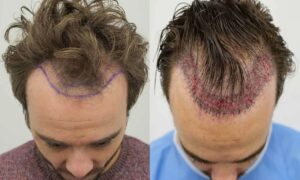
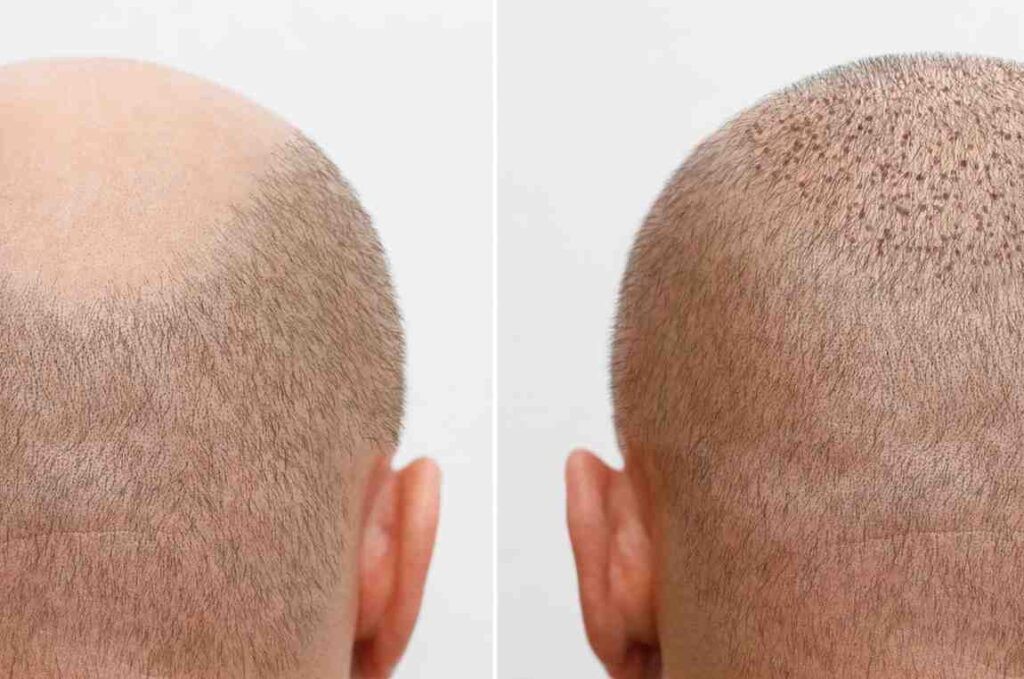
Before deciding to have a surgery, many candidates search for pictures of the outcome of hair transplants. Some before and after images taken in highly controlled environments can be misleading. Furthermore, some photos show the early stages of the hair replacement process but fail to demonstrate the long-term changes in the patient’s hair.
Hairline Design- Definition of Aesthetic Success
One of the most important factors that affect the overall appearance of any hair transplant procedure is the design of the hairline. A hairline that is designed scientifically will not only have a straight line but will also include some form of transitional zone. It is shaped according to:
- Age of the patient,
- Facial symmetry,
- Ethnic hair characteristics,
- Future progression of androgenetic alopecia,
- Donor capacity limitations.
A hairline that is overly aggressive may appear appealing to the patient in the beginning; however, problems will arise as they age or continue to go bald naturally. When developing or planning for a hairline, the current trend is to take a conservative and customized approach versus a one-size-fits-all template.
As Dr. Resul Yaman explains:
“A hairline should not dominate the face; it should integrate with it. The goal is not restoration alone, but long-term natural harmony.”
Follicular Unit Angle, Direction, and Natural Growth Patterns
A poor technique can destroy a well-planned hairline. There are various directions in which hair grows throughout different areas of the scalp.
Generally speaking, hair grows forward and somewhat downward in the frontal region, however, in the sides, it typically leaves the scalp at a lower angle and a more horizontal angle than that on the frontal region. The mid-scalp area usually has a lot more variable hair growth patterns compared to either of the frontal/sides of the head.
Hair that has not been implanted into the scalp correctly will give an unnatural or plugged-tight appearance, particularly under direct light. Therefore, there is little difference between using an FUE or DHI method for implantation.
An expert creates an aesthetically pleasing hairline through careful placement of grafts with precise angulation and direction. This allows the transplanted hair to closely replicate the natural growth pattern of real hair.
Density Planning: Why More Grafts Can Create Worse Results
A common misconception among patients researching hair transplant costs in Turkey is the belief that a higher number of grafts automatically equates to better results.
In reality, it is sufficient for the surgeon to achieve balanced hair density in the recipient area using an appropriate number of grafts. Cases of male pattern baldness involve hair loss in the frontal, mid-scalp, and crown regions, though the extent of the balding varies from person to person.
The surgeon must develop a personalized plan for each patient and carefully strategize the distribution of grafts across the balding areas during the procedure. Only in this way can a natural and aesthetic result be achieved.
To achieve natural density there needs to be:
- Gradual transitions from frontal to mid-scalp areas.
- Balanced distribution of hair follicles throughout the scalp.
- Preservation of donor reserves throughout the scalp.
- Estimates for long-term hair loss.
In particular, having an excess number of follicular units in the frontal zone is one of the leading causes of unnatural results from a poorly planned procedure.
Donor Area Management: The Long-Term Foundation
The donor site is a finite resource. Once hair follicles are removed from the body, they can’t be replaced. The major risk of follicular extraction procedures is the possible over-harvesting of donor sites which can result in:
- Thinning in the back of the head (in the occipital region)
- Less ability to create different styles using the hair
- Fewer options for additional surgery
- Donor site looks patchy or uneven when hair is cut very short
Surgeons with experience will place the same emphasis on preserving the donor site as they will on improving the recipient area.
According to Dr. Yaman: “The donor area should be considered not only as a source but also as a lifetime of reserve. Each extraction should be organized with the future in view.”
Technique vs Execution: The Differences in Meaning
Many of those seeking a hair transplant in Turkey will spend significant amounts of time examining various techniques such as FUE, Sapphire FUE, or DHI. These methods alone may not be sufficient to achieve the desired outcome; the overall success of the clinic will also depend on the following factors:
- The surgeon’s involvement in the critical stage of surgery;
- Extraction precision;
- The experience of the team;
- How well implantation is controlled;
- Patient-specific planning strategy.
Two clinics can use the same surgical hair restoration techniques. However, they can achieve completely different results if the quality of execution is not the same. This is why the most important factor in getting a natural result from a hair follicles surgery is having the expert involved.
Why Turkey Became a Global Hub
Turkey has become one of the world’s most preferred destinations for hair follicles transplantation. Some of the benefits Turkey provides to individuals are the following:
- A large number of high-quality surgical experiences;
- Competitive pricing;
- A specialized team of medical professionals;
- An excellent infrastructure for international patients.
Over the past 15 years, global interest in having a hair transplant has dramatically increased, but the rapid growth of the industry has resulted in a wide variety of quality across clinics.
Some practices are very personal and focused on planning medical needs for the individual patient, while others focus primarily on maintaining a high volume of surgeries by not providing sufficient time and attention to developing a relationship with the individual since the surgeon is not directly involved with the operation. This discrepancy has a major effect on the variability of results.
How to Properly Evaluate Before and After Results
Patients often use before and after photos of hair transplants to help them decide whether or not to undergo surgery. However, assessing results requires more than just the evaluation of the hair visually.
The quality of hair transplantation includes the following criteria:
- Irregularity and softness of the hairline
- Reconstruction of the temporal zone
- Uniformity of the density distribution
- Conservation of the donated area
- Consistent appearance from all viewing angles
- Long-term (9 to 12 months) results
Psychological and Expectation Management Factors
Patients can have a very severe emotional response to their hair loss which can have an impact on their self-image, self-esteem and social confidence. For these very reasons, patients will often make their treatment choice based on their psychological expectations which can lead to unrealistic assumptions.
In addition to the skill of the surgeon, there can be many contributing factors to achieving a successful outcome from hair replacement surgery:
- Clear communication with the patient
- Counselling the patient on realistic expectations
- Educating the patient on the limitations of the donor area
- Informing the patient on the long-term course of hair loss
A follicular restoration procedure can restore hair appearance, but it cannot provide unlimited density.
Clinical Perspective: Dr. Resul Yaman Approach
The focus of hair restoration today is to provide individualized treatment plans instead of standard treatments. At Dr. Resul Yaman Hair Transplant Clinic, our treatment philosophy includes:
- Designing hairlines by proportionality to the face
- Controlling graft placement
- Donor site preservation
- Aesthetic sustainability
This individualized method of hair restoration is also in keeping with the increasing global trend toward patient-centered surgical and clinical planning.
Dr. Yaman summarizes the concept of success in his clinical practice by saying, “The success of a follicular restoration procedure is not measured immediately after surgery, but years later when it still looks natural without effort.”
Conclusion
Follicular restoration can produce two outcomes – natural and unnatural. Natural and successful outcomes are not attributable to luck; they are the result of meticulous planning and skilled surgical technique.
When patients are evaluating hair transplant doctors in Turkey or considering costs of hair transplants in Turkey, the most important factors should not be the advertising claims or number of grafts.
Patients should focus on whether or not the design will retain its natural appearance long term. Additionally, the experience of the surgeon is critical in successfully performing a hair implants procedure.
As you continue on with your search, please note that it is important to look for clinics that demonstrate realistic results and have numerous before and after example cases from patients. Patient reviews are an excellent resource and can help you to be better informed in your decision making.
In the following table, you will find a list of essential information related to Dr. Yaman and his hair transplant clinic based out of Istanbul.
| Field | Information |
| Doctor | Dr. Resul Yaman |
| Clinic | Dr. Resul Yaman Hair Clinic |
| Location | Istanbul, Turkey |
| Specialty | Sapphire FUE, DHI, natural hairline design, donor area preservation |
| Experience | 18 years in hair restoration surgery |
| Languages | English, Turkish |
| Core Focus | Natural hairline design, high-density yet balanced implantation, long-term donor management |
| Patient Types | International patients (Europe, Middle East, North America) |
| Treatment Approach | Surgeon-led, individualized planning, limited overharvesting strategy |
| Medical Philosophy | Natural appearance over maximum graft extraction |
| Website | https://www.resulyaman.com |